Forex Trading for Beginners: A Complete Guide
Need articles like this for your video? They help promote it on YouTube and Google — order them in the Telegram bot @sat_sit_bot. Articles with your video embedded are written and posted by the bot itself — on popular topical sites (no ads). Try it free: 50 articles on us.
· based on the channel Jeffrey Benson Forex
Forex trading for beginners starts with understanding that you are speculating on the price of one currency against another, such as EUR/USD, through a regulated broker. To begin, open a demo account, learn a platform like MetaTrader 5, and master risk management before risking real money. For a structured path, Jeffrey Benson Forex offers a full course and a student program at Fire Pips FX that includes trade signals and education.
What Forex Trading Is and How It Works
Forex, or foreign exchange, is the market where national currencies are traded against each other. It is the largest financial market in the world, with a daily turnover of over $7 trillion, according to the Bank for International Settlements. Unlike stock exchanges, forex has no central location; it operates over-the-counter (OTC) through a network of banks, brokers, and electronic platforms. Trading happens 24 hours a day, five days a week, across major sessions: Sydney, Tokyo, London, and New York. The most traded pairs are EUR/USD, USD/JPY, GBP/USD, and USD/CHF. Prices move based on supply and demand, influenced by economic data, interest rates, geopolitical events, and market sentiment. Beginners typically start with major pairs because they have lower spreads and higher liquidity.
Essential Tools and Platforms for Beginners
To start trading forex, you need three core tools: a broker, a trading platform, and a demo account. First, choose a regulated broker that offers low spreads and reliable execution. Jeffrey Benson recommends Assex Markets in his course; you can sign up via his partner link: https://my.assexmarkets.com/auth/register?partner_code=1699134. Second, download MetaTrader 5 (MT5), a widely used platform that provides charts, indicators, and order execution. Link your broker account to MT5. Third, practice on a demo account until you consistently follow your strategy without emotional interference. Additionally, keep a trading journal to record trades, and use economic calendars to track news events that affect currencies. Many beginners also follow free signal channels, such as https://t.me/firepipsignals, to observe how professional traders approach the market.
Basic Forex Strategy Foundation
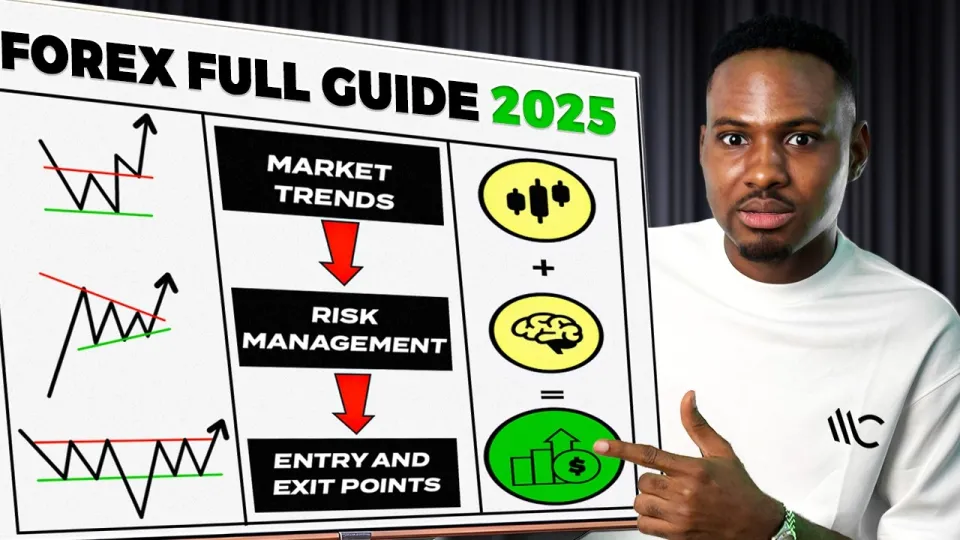
A solid forex strategy combines trend identification, key levels, and risk management. Start by determining the trend using moving averages (e.g., 50-period and 200-period) or higher highs and higher lows. Then, identify support and resistance levels where price tends to reverse. Look for candlestick patterns like engulfing or pin bars at those levels as entry signals. Always set a stop-loss order to limit potential losses and a take-profit order to lock in gains. A common beginner-friendly approach is trend-following on higher timeframes (H1 or H4) to avoid noise. Backtest your strategy on historical data and refine it before going live. Remember that no strategy wins every time; consistency comes from disciplined execution.
Placing Your First Trade and Common Mistakes
Placing your first trade involves selecting a currency pair, deciding on position size, and setting entry, stop-loss, and take-profit orders. For example, if EUR/USD is trending up after bouncing from support, you might buy with a stop-loss below the support level and a take-profit at the next resistance. Position size should be calculated so that the risk per trade does not exceed 1–2% of your account balance. Common mistakes beginners make include overtrading, risking too much per trade, ignoring stop-losses, letting emotions drive decisions, and skipping a trading plan. Another frequent error is trading during major news releases without understanding the potential volatility. To avoid these, stick to a written plan, keep a journal, and review your trades regularly.
Typical Beginner Questions and Concerns
Many beginners wonder if forex trading is a scam or a legitimate opportunity. Forex itself is legitimate, but the industry has scams; therefore, always choose regulated brokers and avoid guaranteed-profit schemes. Another common concern is the time required to become profitable—most traders need months of practice on a demo account and continuous learning. Some ask about the minimum capital needed; while you can start with as little as $100, it's safer to begin with a larger amount to allow proper risk management. Finally, emotional control is a frequent challenge; using a trading journal and sticking to a plan helps reduce impulsive decisions.
Useful Links
- Fire Pips FX student plans – structured education and mentorship.
- Free daily signal channel – one free trade idea per day.
- Assex Markets registration – recommended broker.
- Premium signals help bot – access to premium signal group.
Final Thoughts
Forex trading for beginners requires education, practice, and discipline. Start with a demo account, learn from reliable sources like the Jeffrey Benson Forex channel, and focus on risk management before chasing profits. The journey takes time, but with the right tools and mindset, you can develop the skills to trade consistently. For a structured program that includes signals and mentorship, consider joining the Fire Pips FX student plans.
Key takeaways
- Forex is the global market for exchanging national currencies, with daily volume exceeding $7 trillion.
- Beginners need a regulated broker, a trading platform like MetaTrader 5, and a demo account for practice.
- Risk management—such as risking no more than 1–2% per trade—is essential for protecting capital.
- A basic strategy combines trend analysis, support/resistance levels, and candlestick patterns.
- Jeffrey Benson Forex offers a free full course covering basics to first trade execution.
Questions & answers
How much money do I need to start forex trading?
You can open a live account with as little as $100, but it's recommended to start with at least $500–$1,000 to allow proper risk management. Many brokers offer micro lots, which let you trade with smaller position sizes. However, the key is to practice on a demo account first and only risk what you can afford to lose.
Is forex trading a scam?
Forex trading itself is a legitimate financial market, but scams exist in the industry. Always choose a regulated broker, avoid anyone guaranteeing profits, and never share your account credentials. Education and skepticism are your best defenses.
How long does it take to become profitable in forex?
Most beginners need at least 6–12 months of consistent practice on a demo account and continuous learning to develop a profitable strategy. Profitability depends on discipline, risk management, and market conditions. Don't rush; focus on the process rather than quick gains.
What is the best strategy for a beginner?
A simple trend-following strategy on higher timeframes (H1 or H4) using moving averages and support/resistance levels is often recommended for beginners. Combine it with strict risk management—risking no more than 1–2% per trade—and backtest before going live.
Source: How To Start Forex Trading For Beginners’ 2025 (Full Course) · Markdown version